
If you’re planning a camping adventure in the Lockyer Valley, you’re in for more than just stunning scenery and fresh air. Murphys Creek Escape is home to one of Australia’s most fascinating reptiles—the Land Mullet.
This impressive skink, often spotted basking on sun-warmed rocks or rustling through leaf litter, adds a unique element of wildlife discovery to your stay. Whether you’re an avid nature enthusiast or simply curious about the creatures that share this beautiful region, understanding the Land Mullet can enrich your camping experience and deepen your appreciation for the biodiversity that thrives here.
The Land Mullet (Bellatorias major)
The Land Mullet is a remarkable creature that embodies the wild beauty of eastern Australia’s subtropical rainforests and wet sclerophyll forests. As one of the largest skinks in Australia, this reptile commands attention not just for its size, but for its distinctive appearance and fascinating behaviors. At Murphys Creek Escape, guests have the wonderful opportunity to observe these magnificent lizards in their natural habitat, making your camping trip an educational and memorable wildlife experience.
Unlike many skinks that dart away at the slightest disturbance, Land Mullets can be surprisingly tolerant of quiet observation, provided visitors maintain a respectful distance. Their presence at the caravan park serves as a living reminder of the rich ecosystem that flourishes in the Lockyer Valley, offering families and nature lovers alike a chance to connect with Australia’s unique fauna without venturing far from camp.
What Is a Land Mullet?
Scientific Classification
The Land Mullet belongs to the family Scincidae and was formerly classified under the genus Egernia before being reclassified to Bellatorias. Its scientific name, Bellatorias major, reflects its status as a substantial member of the skink family. This species is endemic to Australia, meaning it’s found nowhere else in the world—making encounters with them truly special.
The classification places Land Mullets among the more robust and social skinks, sharing characteristics with other members of the Egernia group, including complex social behaviors and relatively long lifespans compared to smaller lizard species.
Key Features and Appearance
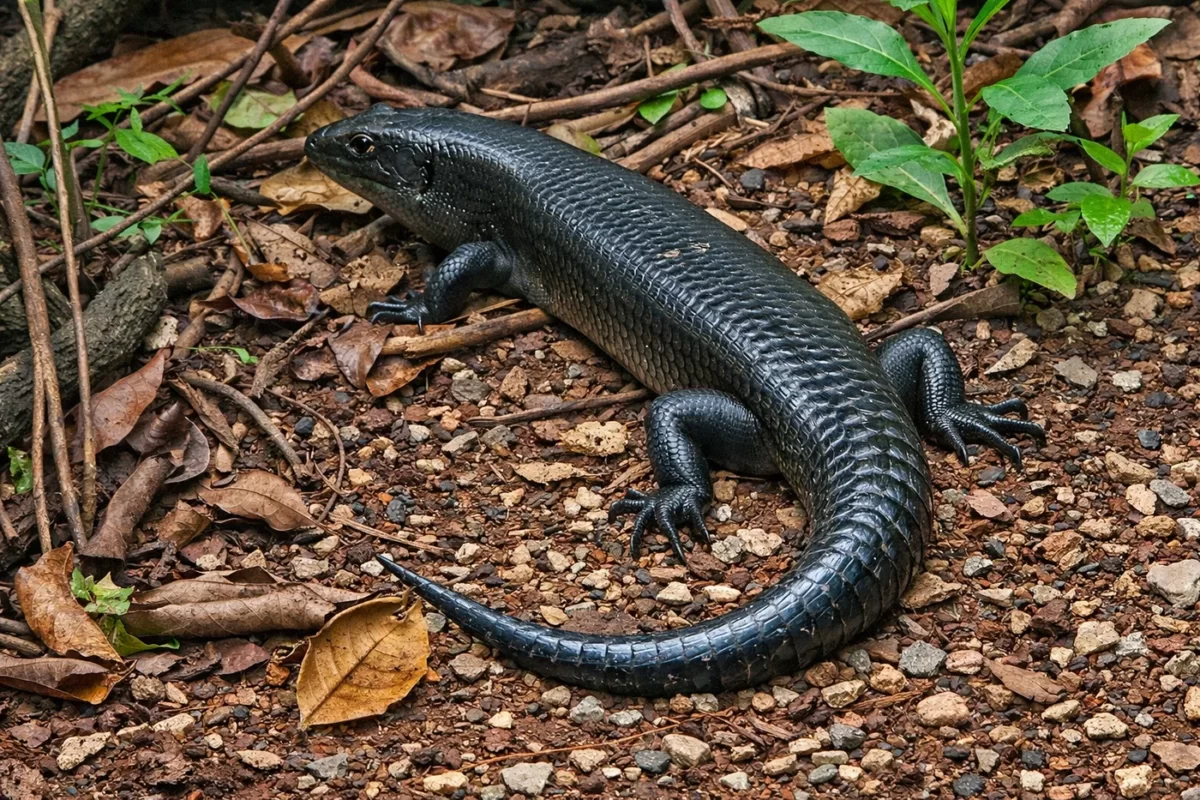
Land Mullets are unmistakable once you know what to look for. Their robust, elongated bodies are covered in large, glossy scales that give them a distinctive armored appearance. The coloration typically ranges from dark brown to almost black on the upper body, with lighter scales creating subtle patterns along the sides. Their bellies tend to be lighter, often cream or pale yellow.
What really sets them apart is their powerful build and sturdy limbs. Unlike the slender, delicate appearance of many other skinks, Land Mullets have a muscular frame that speaks to their ground-dwelling lifestyle. Their heads are broad and triangular, with alert eyes that reflect an intelligent awareness of their surroundings. The tail is thick and strong, making up a significant portion of their total length.
Natural Habitat and Distribution
Range in Eastern Australia
Land Mullets are found along the eastern coast of Australia, with their range extending from southeastern Queensland down through eastern New South Wales. This distribution follows the Great Dividing Range and the coastal regions, where suitable habitat conditions persist. The Lockyer Valley, where Murphys Creek Escape is situated, falls perfectly within this range, creating ideal conditions for healthy Land Mullet populations.
Their presence in this region is a testament to the area’s ecological health and the preservation of natural habitat corridors that allow wildlife to thrive even in areas with human activity.
Preferred Environments
These impressive skinks favor moist, forested environments with plenty of ground cover. Rainforests, wet sclerophyll forests, and heavily vegetated creek lines are their preferred habitats. They need areas with abundant leaf litter, fallen logs, rock piles, and dense vegetation—all of which provide shelter, foraging opportunities, and protection from predators.
The key environmental requirements include access to moisture, shade during the hottest parts of the day, and sunny spots for basking. They’re particularly fond of areas where forest meets clearing, allowing them to move between the security of dense vegetation and open areas where they can warm themselves in the sun.
Land Mullets at Murphys Creek Escape
Where They Are Commonly Seen
At Murphys Creek Escape, guests spot Land Mullets in several key locations around the property. The areas near the creek, with their combination of moisture, vegetation, and sun-warmed rocks, are particularly favored. Walking trails that wind through forested sections often reward observant visitors with sightings, especially during the warmer months.
Rock piles, fallen logs, and the edges of cleared areas near bush camping sites are also hotspots for Land Mullet activity. Early morning and late afternoon tend to be the best times for sightings, as the lizards emerge to bask or forage when temperatures are moderate.
Why the Property Suits Their Habitat
Murphys Creek Escape provides an ideal environment for Land Mullets due to its careful balance of development and habitat preservation. The property maintains natural vegetation corridors, preserves creek-line habitats, and limits disturbance to wildlife areas. This thoughtful approach to land management ensures that Land Mullets and other native species can thrive alongside camping activities.
The varied topography, with its mix of open areas, forested sections, and water features, creates diverse microhabitats that support the complete life cycle of these remarkable reptiles. The property’s commitment to environmental stewardship means that guests can enjoy authentic wildlife encounters while knowing their visit supports conservation.
Behavior and Lifestyle
Daily Activity Patterns
Land Mullets are primarily diurnal, meaning they’re active during daylight hours. Their daily routine typically begins with morning basking to raise their body temperature after the cool night. Once sufficiently warmed, they move into foraging mode, using their keen sense of smell to locate food items in the leaf litter.
During the hottest part of the day, they often retreat to shaded areas or shelter, re-emerging in the late afternoon for another round of basking and feeding. This pattern helps them regulate their body temperature while maximizing foraging efficiency. On cooler days, you might see them remaining in sunny spots for extended periods to maintain optimal body temperature.
Basking and Shelter Habits
Basking is a crucial behavior for Land Mullets, as these cold-blooded reptiles rely on external heat sources to regulate their body temperature. They’re often seen stretched out on sun-warmed rocks, logs, or bare ground, appearing almost motionless as they absorb heat. Their dark coloration aids in heat absorption, allowing them to warm up efficiently.
For shelter, Land Mullets utilize a variety of natural structures. Deep crevices in rock piles, hollow logs, thick vegetation, and burrows provide safe retreats from predators and extreme weather. They’re known to return to favored shelter sites repeatedly, sometimes sharing these spaces with family members or other individuals.
Diet and Feeding Habits
Typical Wild Diet
Land Mullets are omnivorous, with a diet that leans heavily toward plant material but includes some animal protein. In the wild, they consume a wide variety of fruits, flowers, leaves, and fungi. They’re particularly fond of fallen fruits and berries, making them important seed dispersers in their ecosystem.
The animal portion of their diet includes insects, snails, and other invertebrates. This varied diet provides the nutrition necessary for their large size and helps them adapt to seasonal changes in food availability. During fruiting seasons, they may focus heavily on available fruits, while in other periods, they increase their consumption of leaves and invertebrates.
Foraging Behavior
When foraging, Land Mullets use a methodical approach, slowly moving through leaf litter with their heads lowered, using their acute sense of smell to detect food items. They’ll turn over leaves, investigate beneath bark, and explore fallen logs in their search for sustenance. Their strong limbs and claws allow them to dig and move obstacles to access hidden food sources.
Unlike some skinks that are quick and nervous while feeding, Land Mullets often feed at a more relaxed pace, reflecting their relatively large size and reduced vulnerability to many predators. This makes them particularly enjoyable to observe for patient wildlife watchers at Murphys Creek Escape.
Size, Lifespan, and Growth
Average and Maximum Size
Land Mullets are among Australia’s largest skinks, with adults typically reaching 30 to 40 centimeters in total length, including the tail. Some exceptional individuals can grow even larger, with maximum recorded lengths approaching 50 centimeters. Their substantial girth and weight match their length, giving them an impressive, almost prehistoric appearance.
Juveniles start life at around 10 to 12 centimeters and grow steadily over several years. The growth rate slows significantly once they reach sexual maturity, with most growth occurring in the first few years of life. Males tend to be slightly larger than females on average, though there’s considerable overlap in size between the sexes.
Lifespan in the Wild
In the wild, Land Mullets can live for 15 to 20 years or potentially longer, making them remarkably long-lived for reptiles of their size. This extended lifespan is supported by their relatively low predation risk as adults, their ability to find secure shelter, and their adaptable diet.
This longevity means that individual Land Mullets you might spot at Murphys Creek Escape could have been living on the property for many years, developing intimate knowledge of the local terrain and resources. It also means they grow slowly and reproduce relatively infrequently, making habitat protection crucial for population sustainability.
Reproduction and Life Cycle
Breeding Behavior
Land Mullets are viviparous, meaning they give birth to live young rather than laying eggs. Breeding typically occurs in late spring to early summer, with males competing for access to females. During this time, you might observe increased activity and social interactions among Land Mullets.
Females undergo a gestation period of approximately three to four months before giving birth. Unlike many reptiles that produce large numbers of offspring, Land Mullets typically give birth to relatively small litters of two to six young. This reproductive strategy, combined with parental care, improves survival rates for offspring.
Juvenile Development
Newborn Land Mullets are already quite large compared to other skink species, measuring around 10 to 12 centimeters at birth. They’re born fully formed and capable of independent movement, though they often remain near their mother and family group for extended periods.
Juveniles benefit from the protection and social structure of their family group, learning foraging techniques and safe shelter locations from older individuals. This extended parental association is relatively unusual among skinks and contributes to the higher survival rates of young Land Mullets. They reach sexual maturity at around three to five years of age.
Interesting Land Mullet Facts
Unique Traits
One of the most fascinating aspects of Land Mullet behavior is their social nature. Unlike many skinks that lead solitary lives, Land Mullets often live in family groups that share shelter sites and maintain social bonds over multiple years. This complex social structure is more commonly associated with mammals than reptiles.
They’re also known for their relatively docile temperament. While they’ll flee if threatened, they’re not as skittish as many other lizards and may tolerate careful observation from a respectful distance. Their vocalizations are another unique trait—they can produce hissing sounds when threatened or during social interactions.
Differences from Other Skinks
What sets Land Mullets apart from other Australian skinks is primarily their size and robust build. While most skinks are small, slender creatures, Land Mullets have a powerful, almost cylindrical body shape that’s more reminiscent of blue-tongue lizards, though they’re in different genera.
Their social behavior also distinguishes them from the majority of skink species. The formation of long-term family groups and the extended parental care they provide are exceptional among skinks. Additionally, their longevity far exceeds that of most similar-sized lizards, making them unique in multiple aspects of their biology.
Conservation Status
Natural Threats
In their natural environment, Land Mullets face predation from a variety of native predators. Large birds of prey, such as kookaburras and currawongs, pose threats to juveniles, while snakes—particularly carpet pythons and red-bellied black snakes—hunt both young and adult Land Mullets. Native mammals like quolls, where they still exist, may also prey upon them.
Environmental challenges include habitat fragmentation, which can isolate populations and reduce genetic diversity. Extended droughts can impact their food sources, particularly the availability of fruits and invertebrates they depend upon. Natural fires, while part of the Australian ecosystem, can temporarily displace populations from their preferred habitats.
Human-Related Threats
The primary human-related threat to Land Mullets is habitat destruction and fragmentation. Clearing of forests and vegetation for development, agriculture, or other land uses removes the essential habitat elements these skinks require. Roads can create barriers to movement and cause direct mortality from vehicle strikes.
Domestic and feral cats and dogs pose significant predation threats, particularly in areas where human habitation meets natural habitat. Chemical contamination from pesticides and herbicides can affect both the skinks directly and their food sources. Climate change may also impact their habitat suitability over the long term.
How Murphys Creek Escape Supports Wildlife
Visitor Awareness
Education is a cornerstone of Murphys Creek Escape’s conservation efforts. By encouraging guests to observe and appreciate wildlife like Land Mullets, the property fosters a deeper understanding of the importance of habitat conservation. Visitors learn that responsible wildlife watching enriches their camping experience while supporting the long-term survival of these species.
Tips for Spotting a Land Mullet
Best Times of Day
Your chances of spotting a Land Mullet at Murphys Creek Escape are highest during the early morning hours, roughly between 8:00 AM and 10:00 AM, when they emerge to bask after the cool night. This is when they’re most likely to be visible in sunny spots, warming their bodies before the day’s activities.
Late afternoon, from around 3:00 PM to 5:00 PM, offers another excellent window for sightings. During this time, Land Mullets often engage in final basking sessions and foraging before retiring to their shelter sites for the night. On mild, overcast days, they may be active throughout the day, though they’re less predictable during these conditions.
Best Locations
Focus your search on areas where forest meets clearing, particularly near the creek and along walking trails. Sun-warmed rocks and logs in partially shaded areas are prime basking spots. The edges of camping areas, where natural vegetation has been preserved, often serve as transition zones that Land Mullets frequent.
Rock piles, fallen timber, and areas with thick leaf litter are all worth investigating. Move slowly and quietly, as your approach will be more successful if you don’t create excessive noise or sudden movements. Remember that Land Mullets are well-camouflaged against the forest floor, so train your eyes to spot their characteristic shape and movement patterns.
Responsible Wildlife Watching
Do’s and Don’ts
When observing Land Mullets at Murphys Creek Escape, maintain a respectful distance of at least two to three meters. Never attempt to touch, pick up, or corner a Land Mullet, as this causes stress and may result in defensive behavior. Move slowly and quietly to avoid startling them, and if a Land Mullet moves away from you, don’t follow it.
Do observe silently and enjoy the natural behaviors you witness. Share your sightings with other guests and property staff, as this information helps with wildlife monitoring. Don’t feed Land Mullets or any other wildlife, as human food can be harmful and feeding alters their natural foraging behaviors and can make them dependent on handouts.
Photography Etiquette
If you’re photographing Land Mullets, use a zoom lens rather than approaching too closely. Avoid using flash photography, as this can startle and stress the animals. Take only a few photos and then move on, rather than spending extended periods focused on a single individual, which may prevent them from normal activities like feeding or basking.
Be aware of your surroundings and don’t trample vegetation or disturb habitat in pursuit of the perfect shot. Share paths with other visitors and don’t monopolize prime viewing locations. Your photographs can serve as wonderful memories and educational tools, but the welfare of the wildlife should always take priority over getting the shot.
Role in the Ecosystem
Place in the Food Chain
Land Mullets occupy an important middle position in the food web. As omnivores, they consume plant material and invertebrates, helping to control insect populations and contributing to seed dispersal for native plants. The fruits they eat often pass through their digestive system with seeds intact, which are then deposited in new locations, aiding in forest regeneration.
As prey species, they provide sustenance for various predators, including snakes, birds of prey, and some native mammals. This makes them a crucial link connecting plant producers with higher-level predators. Their relatively large size means they represent a substantial food source when captured by predators.
Contribution to Biodiversity
Beyond their direct ecological roles, Land Mullets contribute to ecosystem health in several ways. Their foraging activities help break down organic matter, cycling nutrients back into the soil. The burrows and shelter sites they use often benefit other small animals, creating shared habitat structures.
Their presence serves as an indicator of habitat quality—healthy Land Mullet populations suggest intact forest ecosystems with good vegetation structure, appropriate moisture levels, and low disturbance. This makes them valuable as an indicator species for environmental health in the Lockyer Valley region.
Frequently Asked Questions
Are Land Mullets Dangerous?
No, Land Mullets pose no danger to humans. They’re non-venomous and generally docile by nature. While they have strong jaws capable of delivering a bite if they feel severely threatened or are handled roughly, they’re far more likely to flee than to defend themselves aggressively. Their primary defense mechanisms are hiding, fleeing to shelter, or remaining motionless in hopes of avoiding detection.
If you encounter a Land Mullet while camping near Brisbane or exploring the Lockyer Valley, simply observe from a respectful distance and enjoy the sighting. They’re completely harmless and represent no threat to children, pets, or adults.
How Big Do Land Mullets Get?
Land Mullets typically reach 30 to 40 centimeters in total length, with exceptional individuals growing up to 50 centimeters. This makes them one of the largest skink species in Australia. Their substantial girth matches their length, giving them an impressive, robust appearance that distinguishes them from smaller, more slender skinks.
Juveniles start at around 10 to 12 centimeters at birth and grow steadily over their first several years of life. Most of their growth occurs during this early period, with growth rates slowing considerably once they reach sexual maturity at around three to five years of age.
Can Visitors See Them Easily?
While Land Mullets are present at Murphys Creek Escape and sightings are relatively common, seeing them requires patience and the right timing. They’re not always immediately visible to casual observers, but guests who spend time quietly exploring the property, particularly during optimal viewing hours in the morning and late afternoon, have good chances of encounters.
Their presence is seasonal to some extent, with more activity during warmer months when temperatures support their metabolism and activity levels. During cooler months, they may be less active and spend more time in shelter. However, on mild winter days with sunshine, they still emerge to bask, so opportunities exist year-round for dedicated wildlife watchers.
Discovering Wildlife at Murphys Creek Escape
The opportunity to observe Land Mullets in their natural habitat is just one of many wildlife experiences awaiting you at Murphys Creek Escape. These remarkable reptiles share the property with a diverse array of native species, creating a living classroom for nature education and appreciation. Beyond Land Mullets, you might encounter various other reptiles in the Lockyer Valley, including smaller skinks and geckos, among others.
Plan Your Wildlife Adventure
Ready to experience the natural wonders of Murphys Creek Escape for yourself? There’s no better time to plan your visit to this wildlife-rich corner of the Lockyer Valley. Whether you’re drawn by the prospect of spotting a Land Mullet basking in the morning sun, exploring the walking trails, or simply unwinding in the peaceful natural surroundings, Murphys Creek Escape offers an authentic Australian camping experience.
Check out our accommodation and rates to find the perfect option for your group, from family-friendly powered sites to secluded bush camping locations.
Each offers unique opportunities for wildlife observation and connection with nature. Book your stay today and discover why Murphys Creek Escape is the perfect base for your Lockyer Valley camping adventure.
Bring your camera, your sense of wonder, and your respect for the remarkable creatures that call this place home—the Land Mullets are waiting to be discovered.
Read More: Birdwatching at Murphys Creek Escape in the Lockyer Valley | The Reptiles of Murphy’s Creek in the Lockyer Valley

Jared Jeffery, the digital marketing specialist at Murphys Creek Escape, is a seasoned professional in the field of SEO-driven marketing. With over 10+ years of experience, he possesses a well-rounded background in the digital realm. Throughout his career, Jared has worked in agencies specializing in Travel, Finance, and Event Planning, lending his expertise to major projects involving prominent hotel chains. In addition, he has contributed his writing skills to the creation of numerous articles spanning across a wide range of industries. With his wealth of knowledge and extensive experience, Jared brings a valuable skill set to the table.